
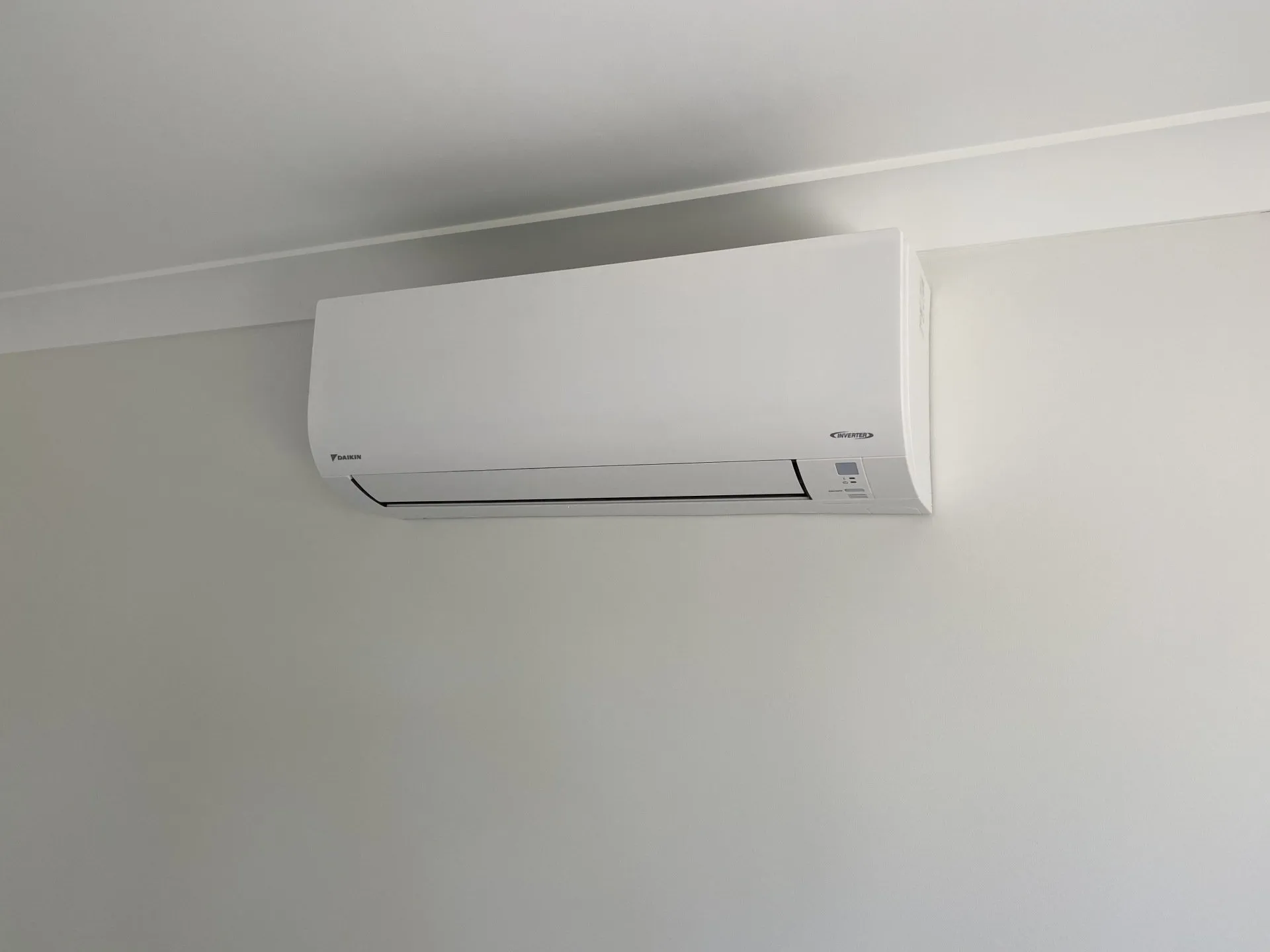
Split or ducted for a Townsville home? We break down cost, zoning, humidity and how solar shifts the maths.
Upfront cost and how each system actually cools a tropical home
The first thing most Townsville homeowners ask us is which one is cheaper, and the honest answer is that split systems win on upfront cost almost every time. A single head unit cools one room, you can stage them out as the budget allows, and the install on a typical brick-and-tile or modern home is straightforward. Ducted is a bigger investment from day one because you are paying for the indoor fan coil, the ductwork through the roof space, the outlets in every room and the labour to tie it all together. On a Queenslander with limited ceiling cavity it can climb further again, since the ducting has to be routed carefully around the existing structure.
Where ducted earns its keep is whole-home comfort. Instead of cooling the lounge and leaving the bedrooms to bake through the build-up, one discreet system handles the lot from a single controller. Splits are room-by-room by design, which suits people who really only live in two or three spaces and want to cool exactly those. We fit plenty of both across Townsville, and if you are weighing it up it is worth booking a proper on-site assessment through our air conditioning team rather than guessing off a brochure, because roof access and home layout change the numbers a lot.
Running costs, zoning and surviving the build-up
Running cost is where the conversation gets local. Our humidity through October to December is brutal, and an undersized or poorly matched system will run flat out trying to pull moisture out of the air, which hammers your Ergon bill. A well-sized split in a closed room is very efficient because it is only conditioning the space you are in. Ducted can be just as economical, but only if it is zoned properly. Zoning lets you shut off the unoccupied bedrooms during the day and direct the cooling to where people actually are, so you are not paying to chill an empty house.
On humidity performance specifically, both system types dehumidify well when correctly sized, but oversizing is the classic NQ mistake. A unit that is too big cools the air quickly then switches off before it has wrung the moisture out, leaving that clammy, sticky feeling even though the thermostat says it is cold. We size to the room and the local design conditions, not a rule of thumb. If your switchboard or wiring is older, particularly in a classic Queenslander, the install may need upgrading too, which is where our Townsville electrician comes in to make sure the circuit can carry the load safely.
How solar rewrites split vs ducted air conditioning Townsville costs
Here is the part that changes everything for North Queensland homes, and it is the question we get asked most. Air conditioning runs hardest through the middle of the day and the long, hot afternoons, which is exactly when a rooftop array is producing its most power. That overlap is the whole game. If your system is cooling the house off your own generation rather than off the grid, the running-cost gap between split and ducted shrinks dramatically, because the most expensive part of either system, the electricity, is coming straight from your roof. Plenty of our customers pair a new ducted system with a solar power system precisely so they can run the whole house through summer without dreading the bill.
The catch is the evenings. The build-up does not switch off at sunset, and that is when the grid tariff bites and your panels have stopped producing. Adding solar battery storage lets you bank the day's excess and run the bedroom splits or the ducted system overnight on stored sunshine instead of Ergon's evening rate. So the real answer on split vs ducted air conditioning Townsville wide is not one-size-fits-all. Match the system to how you actually live in the home, size it for our humidity, and let solar carry the running cost. Get those three right and either option will keep a tropical home comfortable without the bill shock.
Ready to get it sorted?
We handle air conditioning across Townsville and the Burdekin — quoted upfront, installed by our own accredited local team.