
Ceramic fuses, tripping circuits or no safety switch? Here's how to tell your Townsville switchboard is overdue for an upgrade.
Switchboard upgrade signs Townsville homes show first
Your switchboard is the heart of your home's electrical system, and in plenty of older Townsville houses it hasn't kept pace with how we live today. The clearest red flag is ceramic rewireable fuses, those little porcelain holders with fuse wire you screw back in after a blackout. If you're still fishing fuse wire out of a drawer, your board is decades behind current standards. The same goes for a board with no safety switches (RCDs) at all, which are now required to protect the circuits feeding your power points and, increasingly, your lighting and other loads.
Other signs are easy to miss until they become a habit. Breakers that trip for no obvious reason, lights that flicker or dim when the aircon or kettle kicks in, a faint burning smell, or brown scorch marks and discolouration around the board are all telling you something is running hot or struggling. Many original Queenslanders and 70s-80s brick homes around Aitkenvale, Cranbrook, Mundingburra and the northern beaches simply weren't wired for the number of circuits we run now. If your board is a crowded jumble with no room to add anything, that's a sign too, and it's worth having a licensed sparky take a proper look.
Why old boards can't handle modern loads
The honest reason these boards struggle is that they were designed for a much simpler home. A house from the 70s might have had a few lighting circuits, some power points and an electric stove. Today we're stacking on ducted and split-system air conditioning to get through the build-up, induction cooktops, pool pumps, home offices and fast-charging appliances. Each of those wants its own properly protected circuit, and an old board with two or three fuses physically can't divide the load safely. Overloaded circuits run hot, and heat is what ages insulation and starts fires.
Then there's the gear people are adding to cut power bills and futureproof. Putting in a solar power system requires a compliant board the installer can safely connect to, and the same applies when you add solar battery storage to ride through outages. An EV charger installation is one of the biggest single loads a home can draw, often running for hours, and an old board with no spare capacity just can't accommodate it. Add our storm-season surges into the mix and an undersized, unprotected board becomes the weak link, with no margin to absorb the hit.
What a switchboard upgrade actually involves
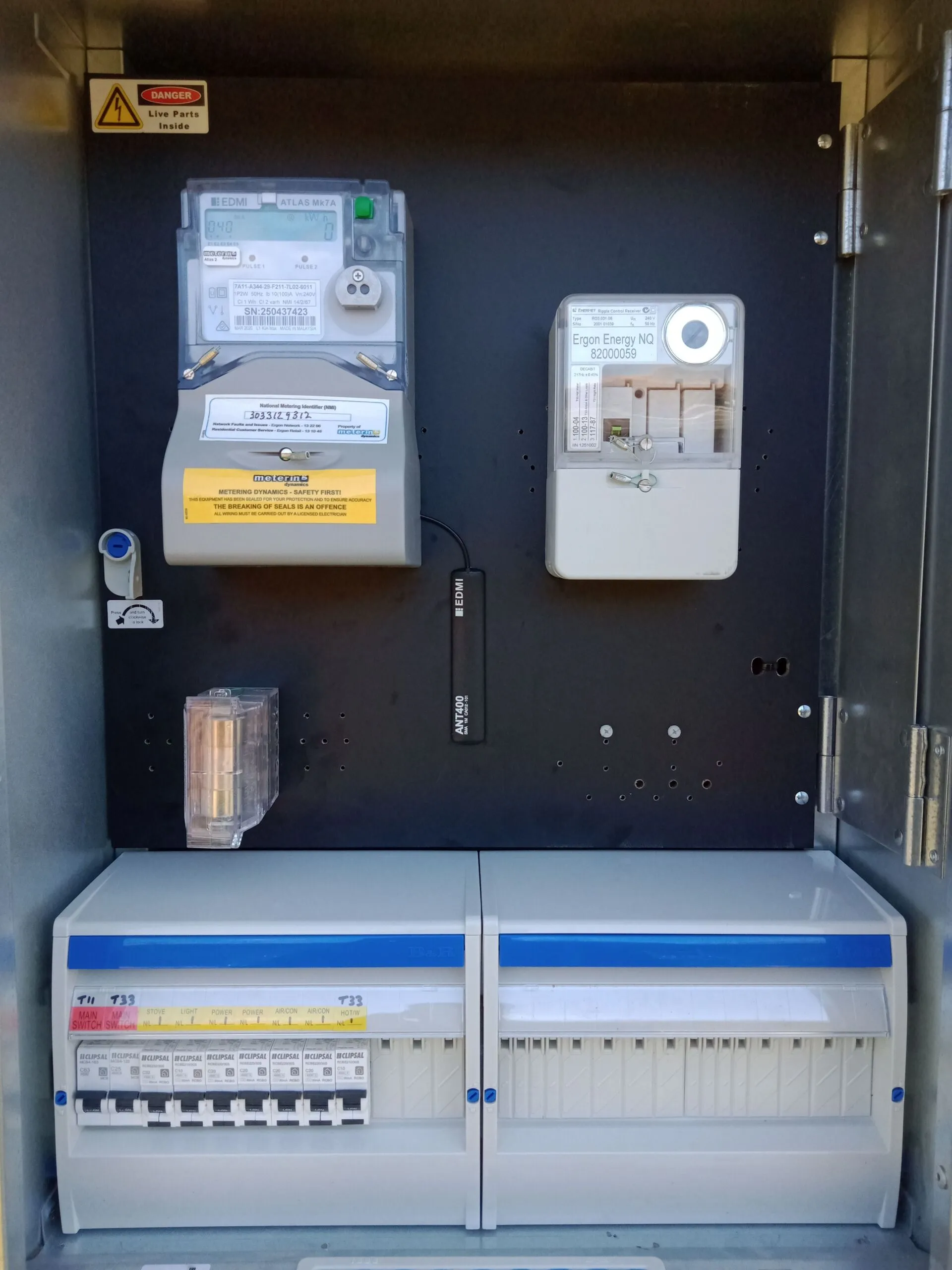
An upgrade isn't as disruptive as people fear. We start by assessing your existing board and the home's wiring, then design a new layout with the right number of circuits for how you actually live, plus headroom for what you're planning to add. The old fuses come out and modern circuit breakers go in, along with safety switches (RCDs) on the circuits that need them so the supply cuts in a fraction of a second if a fault or a person is at risk. Where the enclosure or main wiring is past it, we replace that too, and tidy the whole thing so it's labelled and easy to work on next time.
Power is off for part of the day, most straightforward upgrades are done within it, and you're left with a board that meets current standards and is ready for solar, battery, aircon or an EV down the track. Because it's wired into your main supply, this is strictly licensed work, so it's not a DIY job or one for a handyman. If any of the switchboard upgrade signs Townsville homes typically show sound familiar, the safe move is to get our team out for an honest assessment. You can read more about our electrical services or give us a call, and we'll tell you straight whether your board has years left or is genuinely overdue.
Ready to get it sorted?
We handle electrical services across Townsville and the Burdekin — quoted upfront, installed by our own accredited local team.