
This 10kW solar system Townsville guide covers who the size suits, roughly what it generates in our sun, the roof space it needs and how it compares with 6.6kW and 13.2kW.
Who a 10kW system suits
Most homes we quote in Townsville land somewhere between 6.6kW and 13.2kW of panels. A 10kW solar system Townsville households get full value from usually belongs to a house that uses a lot of power while the sun is up: ducted air conditioning or several split systems running through the afternoon, a pool pump, someone working from home, or an electric vehicle charging in the driveway.
The number that settles it is on your Ergon bill. Divide the kWh for the billing period by the number of days in it and you have your average daily use. As a rough guide, homes averaging 30 kWh a day or more, with a good share of that used between 9am and 4pm, are where a 10kW array tends to make sense.
A household that is empty all day and uses most of its power after dark will export much of what a 10kW array makes, and the feed-in tariff pays far less per kWh than you pay to buy power back in the evening. For that home a smaller array is usually the better design, or a 10kW array paired with battery storage so the daytime surplus is kept for the evening peak. We explain the general sizing method in how many solar panels Townsville homes need.
10kW solar system Townsville output in round numbers
Townsville gets more sun than the southern capitals, but heat costs panels some efficiency, and the wet season brings runs of overcast days. For planning, a conservative figure is roughly 4 to 4.5 kWh per kW of panels per day, averaged across the year. On that basis a 10kW array produces roughly 40 to 45 kWh on an average day, or somewhere around 14,600 to 16,400 kWh a year.
Those figures are yearly averages. A clear day in the dry season can beat them comfortably, and a week of monsoon cloud in February will pull daily output well below them. Your monitoring app will show that swing, so judge the system on the monthly and yearly totals rather than any single day.
Orientation changes the shape of the day. North-facing panels give the highest daily total, while an east and west split gives a flatter curve that covers morning use and late-afternoon air conditioning better. Shade from trees, a neighbouring two-storey house or a solar hot water unit on the roof cuts output further, which is why we model the actual roof before we put an output figure on a quote.
Roof space and panel count
Panel count depends on panel wattage. Most residential panels sold now sit roughly between 410W and 480W. At 440W, a 10kW array is 23 panels (10.12kW). At 475W it is 21 panels (9.98kW). A panel in that range is about 1.7 to 1.9 metres long and 1.1 metres wide, so plan on roughly 45 square metres of usable roof for the panels alone, before edge clearances and the gaps needed around vents, skylights and ridge capping.
Few Townsville roofs have that much space on a single north face, so a 10kW layout is often split across two or three roof planes. That works well when the inverter has enough separate inputs (MPPTs) to handle strings facing different directions. Roof type matters too. Corrugated iron, tiles and concealed-fix sheeting each need different fixings, and every array in Townsville has to be mounted to suit wind region C, which adds rails and fixings compared with a southern install.
Single phase, three phase and Ergon export limits
Whether your home is single phase or three phase affects what can be connected. Many older Townsville houses are single phase, while newer builds and homes with ducted air are more likely to be three phase. The meter box usually tells us which on the site visit.
Ergon Energy sets the limits on inverter size and on how much power a system can send back to the grid for each type of connection. Those limits differ between single and three phase supplies and are reviewed from time to time, so we check the current rules for your address when we lodge the connection application and design to the approval Ergon gives.
Where export is capped, the inverter is set to limit what flows back to the grid. The house can still use the full output of the panels, so on a home with high daytime use an export cap costs very little. On a three phase supply, a 10kW array can run through a three phase inverter that spreads generation across all phases, which suits homes with three phase air conditioning or a three phase EV charger.
10kW vs 6.6kW vs 13.2kW
The table below uses 440W panels and the same rough figure of 4 to 4.5 kWh per kW per day. Treat the output column as a planning guide for an unshaded roof facing roughly north.
| Panel capacity | Panels at 440W | Approx. panel area | Typical inverter | Rough daily output | Usually suits |
|---|---|---|---|---|---|
| 6.6kW | 15 | 30 m² | 5kW | 26 to 30 kWh | Smaller homes, modest daytime use |
| 10kW | 23 | 45 m² | 8kW to 10kW | 40 to 45 kWh | Families with daytime air con, a pool or an EV |
| 13.2kW | 30 | 58 m² | 10kW | 53 to 59 kWh | Large all-electric homes, battery or EV plans |
The inverter column follows the rule for small-scale technology certificates (STCs), which allows panel capacity of up to 133% of inverter capacity. That is why 6.6kW of panels commonly sits on a 5kW inverter and 13.2kW on a 10kW inverter. A 10kW array can run on an 8kW or 10kW inverter depending on phase, export limits and battery plans.
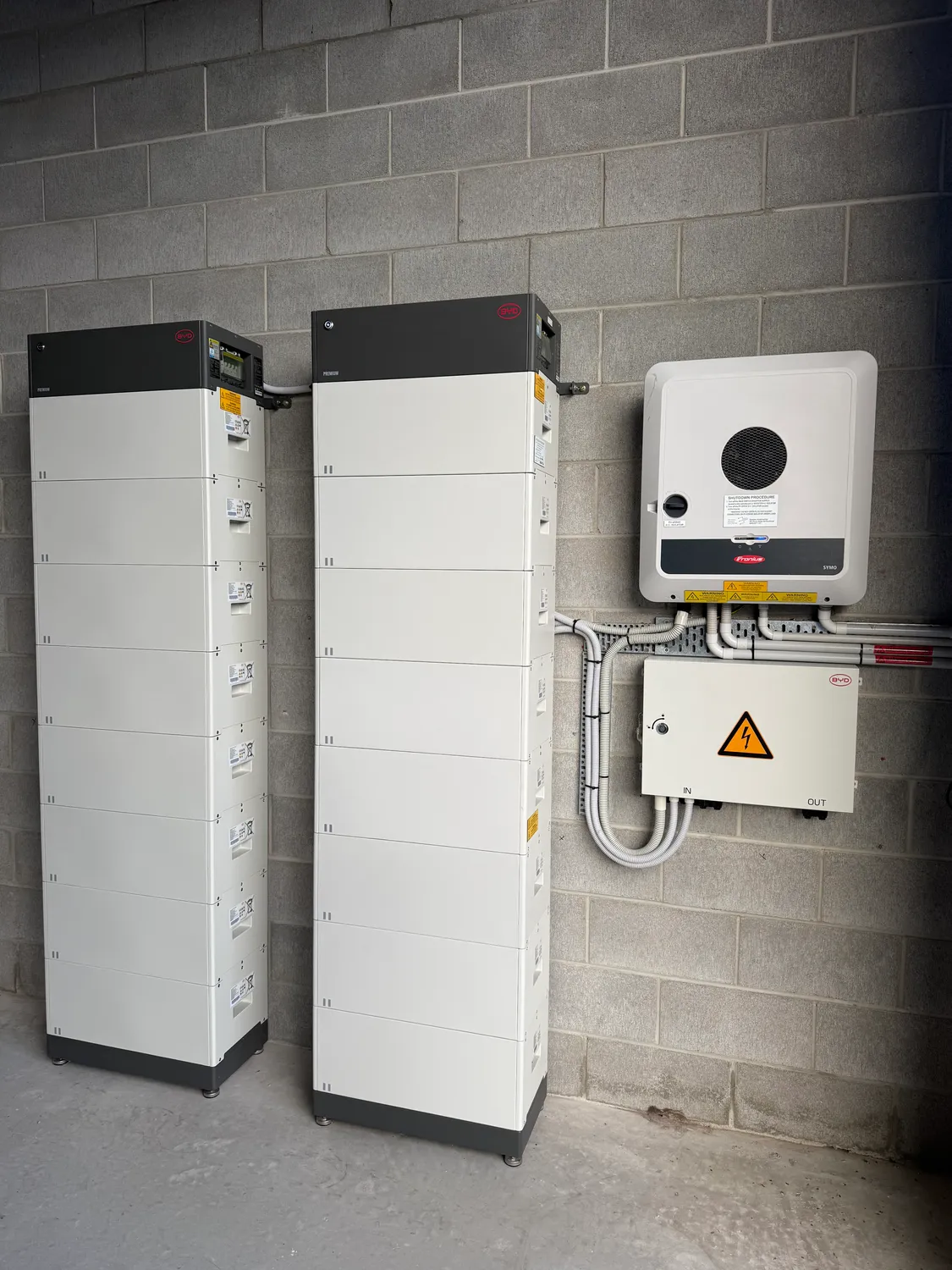
If your bill sits between two sizes, the deciding factors are usually daytime use, roof space and whether a battery or EV is coming in the next few years. Adding panels later means matching old and new panels and sometimes changing the inverter, so sizing for known plans at the start is usually simpler. We pair 10kW arrays with inverters from brands including Fronius, Sungrow and Goodwe.
To size yours, we look at twelve months of Ergon bills, measure the roof and confirm your phase and connection before recommending a system. You can see what we install on our Townsville solar installation page, or call us on 0422 677 121.
Ready to get it sorted?
We handle solar power systems across Townsville and the Burdekin — quoted upfront, installed by our own accredited local team.