
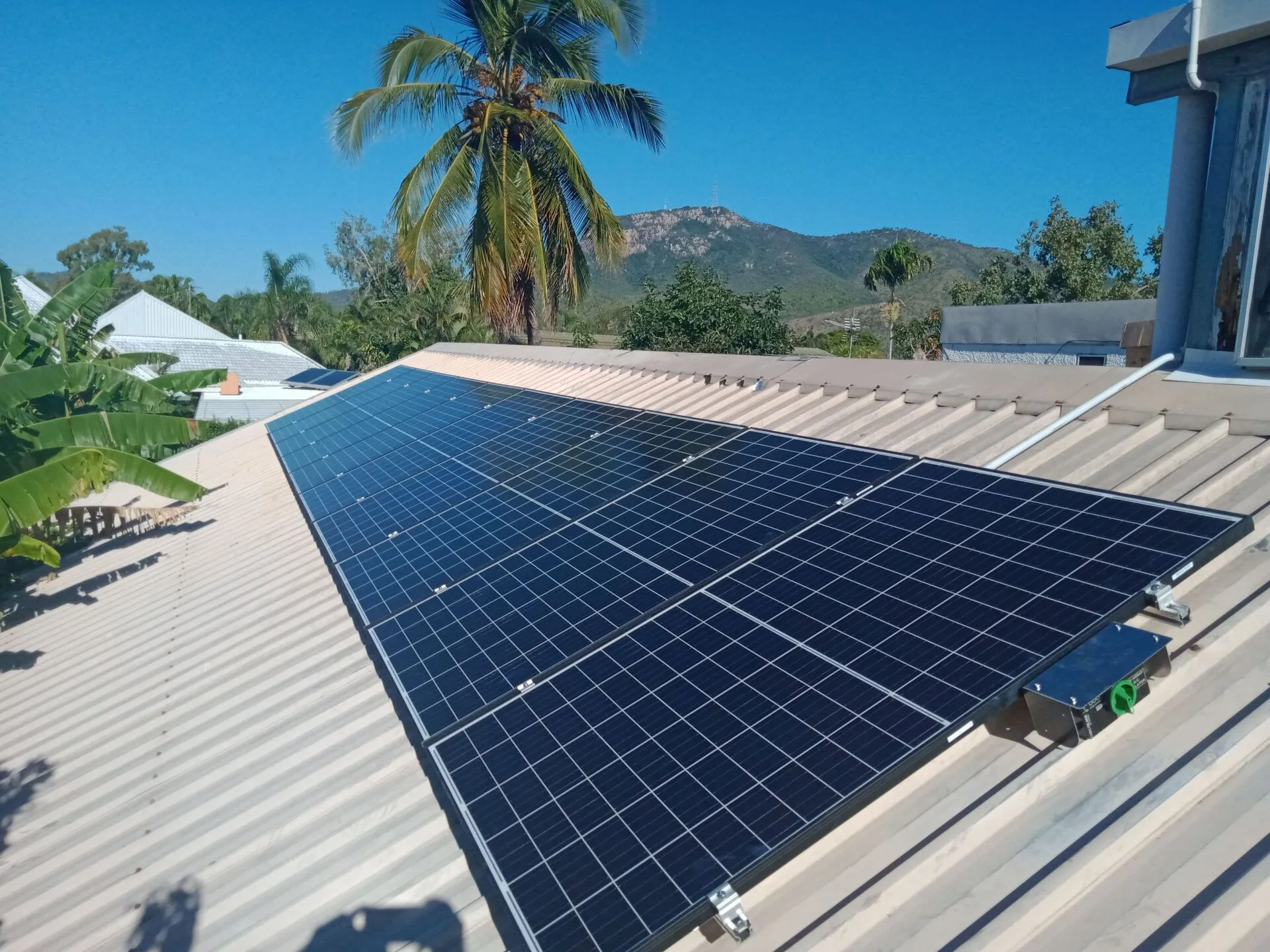
Why mounting, fixings and proper engineering decide whether your North Queensland solar survives a category 4 cyclone.
It isn't the panel that fails first — it's everything holding it down
Every storm season we get the same call: someone's bargain solar array peeled off the roof during the first big blow, taking battens and tiles with it. Here's the hard truth most cheap installers won't tell you — in a cyclone, panels almost never fail because the glass gave out. They fail because the racking, the roof attachment, or the fixings let go. Townsville and the wider NQ coast sit in Region C, a high-wind zone under AS/NZS 1170.2, and the engineering that keeps a roof-mounted array put under category 4 loads is a world away from what passes in Brisbane or Sydney. A panel rated to handle wind pressure on a test bench means nothing if it's bolted to undersized rail with the wrong spacing.
Wind doesn't just push on a solar array, it lifts. As gusts accelerate over the roofline they create suction that tries to tear the whole system upward, and that uplift load is exactly what proper solar power systems in this region must be engineered to resist. We design rail layouts, rail spans and clamp positions to the specific wind classification of your address and roof pitch — not a generic national template. Get that wrong and the strongest panel in the world becomes a very expensive sail.
Fixings, roof attachment and the salt-mist problem
The connection between racking and roof structure is where corners get cut hardest. A compliant install lands fixings into rafters or purlins — the actual structural timber or steel — not just the thin roof sheet, with the right gauge of fastener and the correct count per foot for the wind load. Cheap jobs over-space their feet to save on rail and brackets, screw into battens that were never meant to carry uplift, and skip the structural certification that a Region C install legally needs. When the cyclone arrives, those shortcuts are the first thing to peel.
Then there's the NQ killer most southern installers underestimate: salt mist. Out toward the northern beaches, Pallarenda and the coastal suburbs, airborne salt eats cheap aluminium rail, mild-steel fasteners and poorly rated connectors within a few years — long before any cyclone tests them. We spec marine-grade stainless fixings and properly anodised rail so the system that survives the wind also survives the corrosion. Pairing that with solar battery storage matters too: when the grid drops during the wet, a properly installed battery keeps the lights on, but only if its mounting and wiring meet the same standard as the array above it.
Cyclone-rated solar Townsville: panel tier and certification
Panel quality still matters, just not the way the brochures suggest. In our heat and brutal UV, tier-one panels with real local warranty backing hold their output and resist degradation far better than no-name imports that fade in a few summers. We fit premium Winaico panels where customers want the strongest product and warranty, and reliable tier-one options like Jinko and JA Solar where the budget needs to stretch without dropping into rubbish. The point isn't the most expensive panel — it's a panel that's actually here in ten years.
What ties it all together is certification. A properly engineered NQ install comes with documentation that proves it's compliant for the wind zone, installed by a licensed and SAA-accredited team, and signed off to AS/NZS standards. A cheap install skips the engineering report, fudges the wind rating and leaves you exposed — on your roof and on your insurance. If you want it done so it survives the next big one, talk to a local crew who does the maths, and have our electrical services team check your existing system before storm season rather than after. With cyclone-rated solar Townsville wide, the difference between a system that stays put in a category 4 and one that doesn't was decided the day it was installed.
Ready to get it sorted?
We handle solar power systems across Townsville and the Burdekin — quoted upfront, installed by our own accredited local team.