
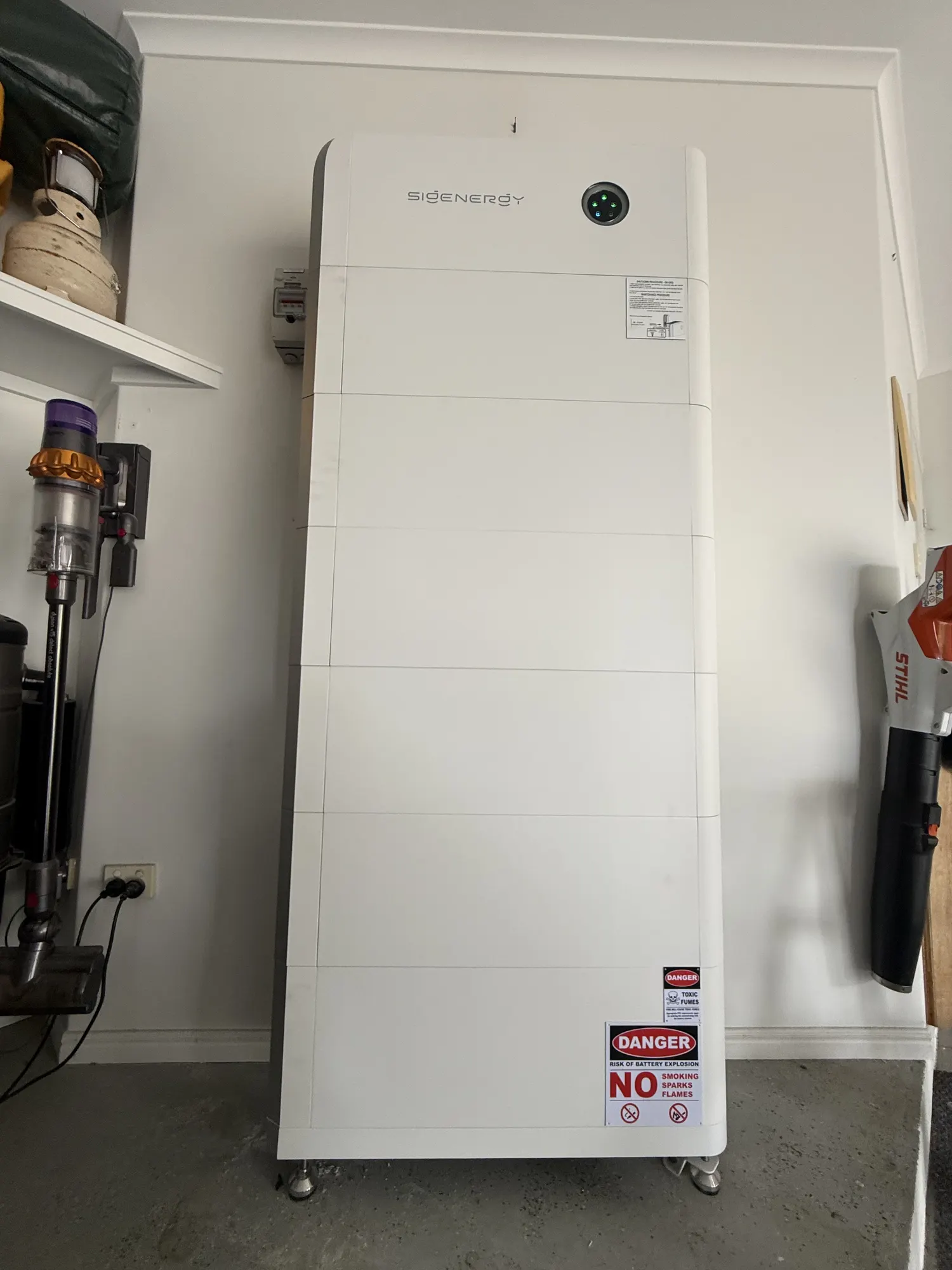
Forecasters say this year's El Niño could be one of the strongest on record. Here's what that could mean for a Townsville home running on solar.
What is happening this year
El Niño is a warming of the central Pacific Ocean that shifts weather patterns around the world. Media reports say the Bureau of Meteorology declared El Niño underway in mid-June 2026, the first in almost three years. In April, the ABC reported that the Bureau's ACCESS-S model pointed to a peak near +2.5°C above average in spring, past the +2.0°C mark often used to describe a super El Niño. Only three years since 1950 have stayed above +2°C for three months or more: 1982, 1997 and 2015.
Forecasts can change, and this year has already been wetter across much of the country than the Bureau's winter outlook suggested. So treat the below as what El Niño usually brings, not a promise.
What El Niño usually means for north Queensland
The strongest heat signal is in the south. The Bureau has said El Niño typically favours warmer-than-average conditions across the southern two-thirds of Australia, so Townsville is not at the centre of it. The tropics get a different effect: according to the ABC, El Niño tends to delay the monsoon and cut the number of tropical cyclones, especially for Queensland. The 2015 super El Niño brought the weakest and least active cyclone season on record.
Fewer cyclones doesn't mean no storms. Wet-season thunderstorms still bring down powerlines, and it only takes one bad night to lose power for hours. Planning for a blackout is still worth doing, El Niño or not.
Hot days and solar panels
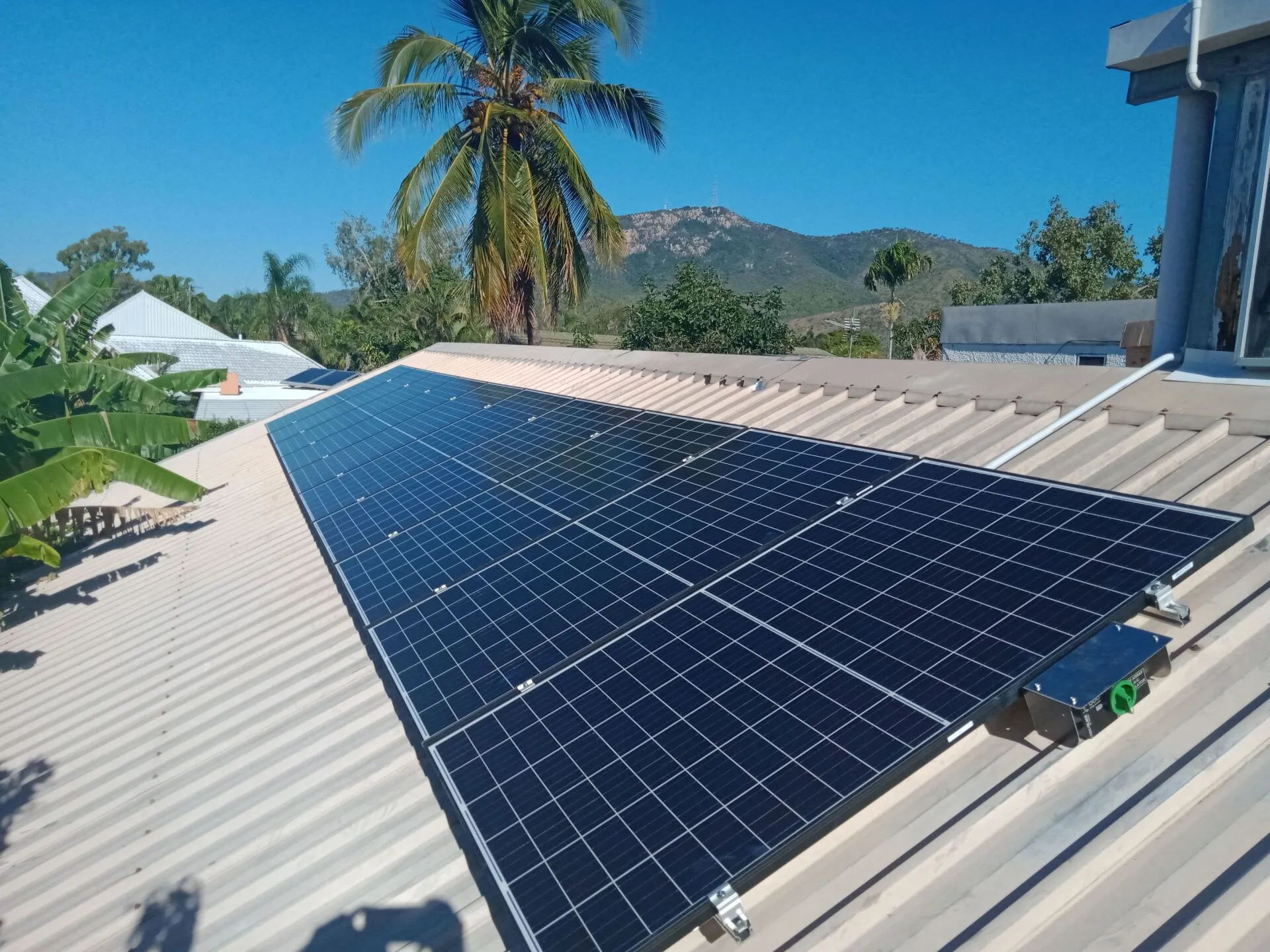
Solar panels make less power when they're hot. Every panel has a temperature coefficient on its datasheet that tells you how much output it loses per degree above 25°C. Back-contact panels such as Aiko and Winaico lose about 0.26% per degree; TW Solar's full-black panel loses 0.28%. On a hot Townsville roof that gap adds up over a summer, which is one reason we look at heat tolerance, not just the watt rating, when choosing panels.
Hot nights, air-con and batteries
A hot summer means air-con running into the evening, after the panels have stopped producing. Without a battery, that evening load comes off the grid at full price, and your daytime solar gets exported for a few cents. A home battery stores the midday surplus and runs the house through those evening hours.
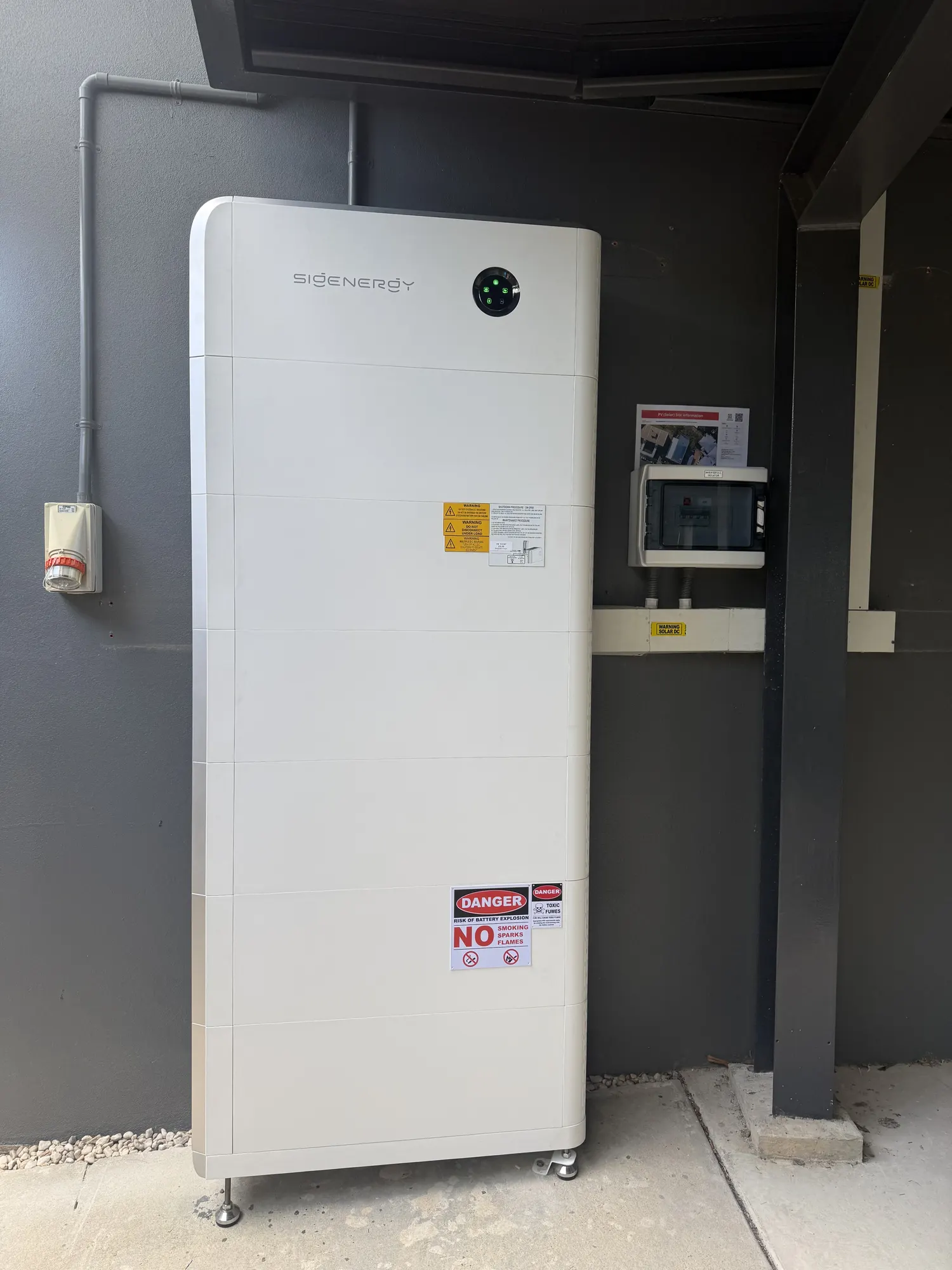
Heat matters for the battery too. Most home batteries are rated to around 50°C and lose output near that limit, and some warranties require the battery to stay out of direct sun. We put batteries in shaded, ventilated spots for exactly this reason, and on hot west-facing walls we'll suggest a different location before we quote.
If a hot summer has you thinking about a battery, our battery comparison sets out Sigenergy, GoodWe, Fronius, Tesla and the rest side by side. On the 44c feed-in tariff? Read what 44c owners should do first.
Ready to get it sorted?
We handle solar battery storage across Townsville and the Burdekin — quoted upfront, installed by our own accredited local team.